New policy to protect Kenya’s marginalized minority groups

Urban Shihemi
- Published: 02 December 2025



By Urban Shihemi, December 2,2025
The government has officially validated a long-awaited policy aimed at protecting and uplifting ethnic minorities and marginalised communities across Kenya.
The new policy provides a comprehensive framework for promoting inclusion, equity, and protection of the rights of communities that have historically faced social, economic, and political exclusion.
Under the provisions of the Ethnic Minorities and Marginalised Communities Bill, 2025 and its accompanying policy document, the State commits to guarantee recognition, representation, and equitable access to essential services including land rights, healthcare, education, cultural preservation, and infrastructure for communities defined under the law.
Officials say the policy aims to transform constitutional guarantees into concrete, actionable interventions.
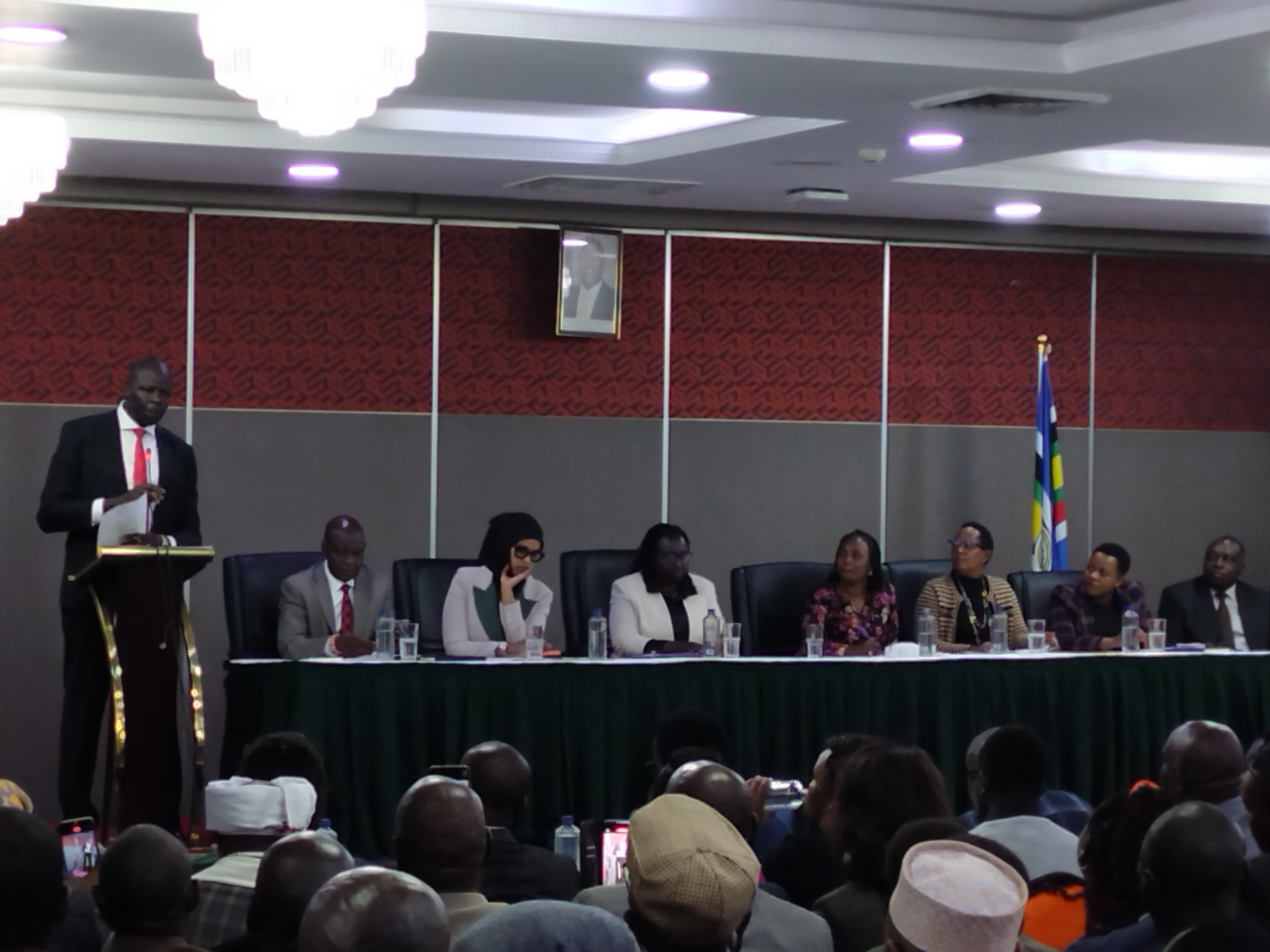
Speaking in Nairobi during the validation program that brought together government officials, human rights groups,and community representatives,the Cabinet Secretary Ministry of Gender, Culture, and Children Services Hanna Wendot Cheptumo lauded the validation as a landmark achievement.
She noted that since the promulgation of the 2010 Constitution the country has gradually made significant strides toward recognising diversity but until now lacked a unified policy to protect vulnerable communities.
The new policy, she said, “cements the State’s commitment to equity, dignity, and inclusive development for all Kenyans.”
Principal Secretary for the State Department for Wildlife Silvia Museiya appealed to ethnic minorities and marginalised communities to take bold and proactive steps to ensure their representation on decision-making platforms.
She called on youth from these communities to register as voters and actively participate in governance, so they can shape policies affecting their lives.
Also addressing the gathering, the Principal Secretary for Tourism John Ololtuaa underlined the importance of cultural and natural heritage conservation.
He said the policy will enable better inclusion of minority and indigenous communities in sustainable tourism development ensuring their traditions, languages, and ancestral lands are respected, preserved, and benefit from eco-tourism opportunities under equitable terms.
The policy explicitly targets ethnic minorities and marginalised communities that have for decades been underrepresented or excluded from development. These include, but are not limited to Indigenous hunter-gatherer groups such as Ogiek, Sengwer, Yaaku, Aweer (Boni) / Boni, and Waata.
Pastoralist communities such as Turkana, Maasai, Borana, Rendille, Samburu, Pokot, Ilchamus, among others residing in arid and semi-arid lands (ASALs).
Coastal and minority communities such as Bajuni, Basuba, Barawe / Barawa, and other smaller ethnic groups including various linguistic and cultural minorities.
Once launched, the documents will provide county governments with a clear pathway for engaging marginalized groups.
<p><span style="color: rgb(0, 0, 0); background-color: transparent;">By Tego Wolasa, Absa Bank Kenya Head of Islamic Banking, March 18, 2026</span></p><p><span style="color: rgb(0, 0, 0); backgro...
<p><span style="color: rgb(0, 0, 0); background-color: transparent;">By Urban Shihemi, March 16, 2026 </span></p><p><span style="color: rgb(0, 0, 0); background-color: transparent;">Humanitarian...
<p><span style="color: rgb(0, 0, 0); background-color: transparent;">By Urban Shihemi, March 13, 2026</span></p><p><span style="color: rgb(0, 0, 0); background-color: transparent;">Activists and...
<p><span style="color: rgb(0, 0, 0); background-color: transparent;">By urban Shihemi, March 8, 2026 </span></p><p><span style="color: rgb(0, 0, 0); background-color: transparent;">Students from...
<p><span style="color: rgb(0, 0, 0); background-color: transparent;">Urban Shihemi, March 7, 2026 </span></p><p><span style="color: rgb(0, 0, 0); background-color: transparent;">The stage is set...
<p><span style="background-color: transparent; color: rgb(0, 0, 0);">By Urban Shihemi, March 7, 2026 </span></p><p><span style="background-color: transparent; color: rgb(0, 0, 0);">In a remarkable fea...
<p><span style="color: rgb(0, 0, 0); background-color: transparent;">By Urban Shihemi, March 5, 2026</span></p><p><span style="color: rgb(0, 0, 0); background-color: transparent;">Kenya is set to begi...
<p><span style="color: rgb(0, 0, 0); background-color: transparent;">By Urban Shihemi, February 26, 2026</span></p><p><span style="color: rgb(0, 0, 0); background-color: transparent;">The Intergovernm...
<p><span style="background-color: transparent;">By Urban Shihemi, February 26,2026</span></p><p><span style="background-color: transparent;">Jamia Mosque Nairobi has continued its long-standing tradit...
<p>By Urban Shihemi, February, 17,2026</p><p>Health Cabinet Secretary Aden Duale received a 30-ton consignment of humanitarian relief cargo from the United Arab Emirates (UAE) aimed at supporting comm...
<p>By Urban Shihemi, February,17,2026</p><p>The English Premier League will pause matches to allow Muslim players to break their fast during Ramadhan, according to British media reports.</p><p>The BBC...
<p><span style="background-color: rgb(255, 255, 255); color: rgb(33, 37, 41);">By Urban Shihemi , February 12, 2026</span></p><p><span style="background-color: rgb(255, 255, 255); color: rgb(33, 37, 4...
<p><span style="color: rgb(0, 0, 0); background-color: transparent;">By Urban Shihemi , February 11, 2026</span></p><p><span style="color: rgb(0, 0, 0); background-color: transparent;">President Willi...
<p><span style="color: rgb(0, 0, 0); background-color: transparent;">By Urban Shihemi , February 11, 2026</span></p><p><span style="color: rgb(0, 0, 0); background-color: transparent;">The Supreme Cou...
<p>By Urban Shihemi , February 10, 2026</p><p>The government has successfully rescued and repatriated 27 Kenyans who were stranded in the Russian Federation after they were illegally enlisted to fight...