Igad’s New Strategy Aims To Address Food Insecurity In The Horn Of Africa

Urban Shihemi
- Published: 21 December 2025



By Urban Shihemi, December 21,2025
The Intergovernmental Authority on Development (IGAD) is in the final stages of developing the Regional Agrifood Systems Investment Plan (RASIP) 2026–2035, a flagship framework aimed at transforming agrifood systems across the Horn of Africa.
The new plan will succeed the Regional Agricultural Investment Plan (RAIP 2016–2020) and is expected to guide regional policies, investments, and partnerships over the next decade.
The RASIP comes at a critical time for the region, which has endured a series of compounding shocks in recent years, including recurrent droughts and floods, desert locust invasions, pandemics, and market disruptions.
“IGAD Member States need to address the key issues affecting agrifood systems, including low productivity, limited access to modern inputs and technology, weak value chains and regional trade linkages, inadequate processing and storage infrastructure, and constrained access to finance for farmers, pastoralists, and small and medium-sized enterprises,” said Dr. Sylvia Henga, IGAD’s Policy and Food Security Expert.
These challenges, often exacerbated by conflict and displacement, have significantly undermined livelihoods, food security, and progress toward poverty reduction.

Dr Mohy Tahomi, Director of IGAD Economic Cooperation and Regional Integration during a press briefing In Nairobi, December, 21,2025
According to Dr Mohy Tahomi, Director of IGAD Economic Cooperation and Regional Integration, “These challenges cannot be solved by agriculture alone and require coordinated, multi-sectoral approaches.”he said.
Gaps in data systems, monitoring, and policy coordination have further limited governments’ capacity to anticipate and respond effectively to emerging crises.
The new plan builds on lessons from the RAIP 2016–2020 and aligns closely with Member States’ ongoing National Agrifood Systems Investment Plans (NASIPs). It introduces a stronger emphasis on climate adaptation, sustainable natural resource management, youth and women’s economic empowerment, regional trade integration, and digital innovation. The RASIP also links agrifood transformation with other IGAD strategic priority areas, including water, land, the blue economy, and the environment, to ensure a coherent and integrated development approach.
In response, the African Union, through the Kampala Comprehensive Africa Agriculture Development Programme (CAADP) Declaration of 2021 and the CAADP Strategy and Action Plan 2026–2035, has called on Regional Economic Communities to promote climate-resilient, inclusive, and nutrition-sensitive agrifood systems.
“IGAD has translated this continental mandate into action by developing the RASIP as a results-oriented and investment-driven framework to strengthen regional cooperation, mobilize resources, and accelerate agrifood systems transformation”. said Dr Mohy Tahomi, Director of IGAD Economic Cooperation and Regional Integration.
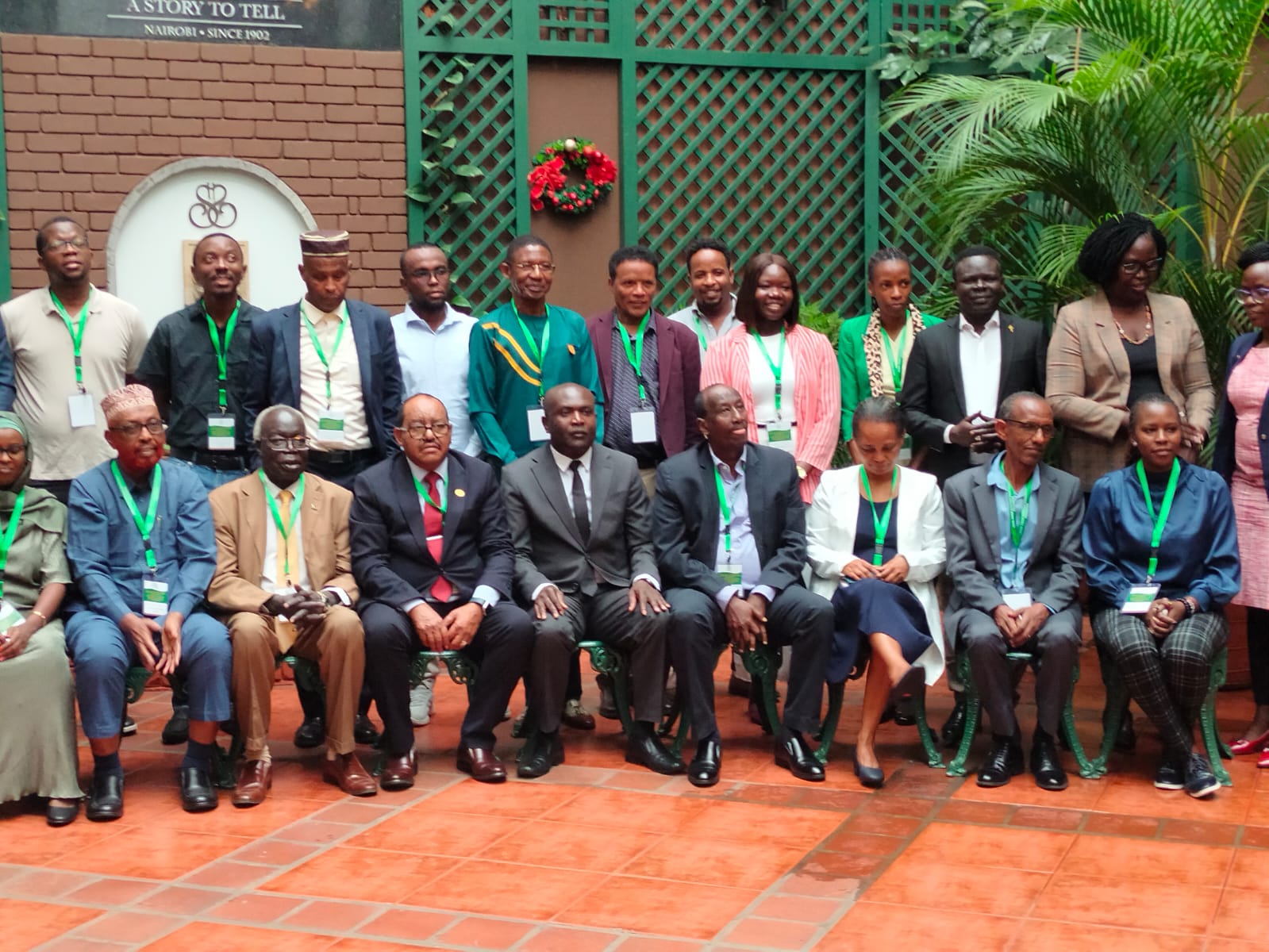
A major milestone in the RASIP development process was achieved during a Regional Write-shop held in Mombasa from 6–10 October 2025. The meeting brought together Member States, technical experts, and development partners to co-create the zero-draft of the plan. Participants defined the RASIP’s vision, core pillars, flagship programmes, theory of change, and preliminary implementation and monitoring arrangements.
Building on these outcomes, IGAD is holding a two day Regional Validation Meeting in Nairobi, which will serve as the final technical and policy review of the draft RASIP. The validation forum will ensure the document reflects shared regional priorities and is ready for endorsement by Ministers responsible for agriculture and food systems.
Once adopted, the RASIP is expected to strengthen regional coordination of agrifood investments, enhance coherence between national and regional initiatives, and provide a solid foundation for resource mobilization, contributing to more resilient, inclusive, and sustainable food systems across the Horn of Africa.
<p><span style="color: rgb(0, 0, 0); background-color: transparent;">By Tego Wolasa, Absa Bank Kenya Head of Islamic Banking, March 18, 2026</span></p><p><span style="color: rgb(0, 0, 0); backgro...
<p><span style="color: rgb(0, 0, 0); background-color: transparent;">By Urban Shihemi, March 16, 2026 </span></p><p><span style="color: rgb(0, 0, 0); background-color: transparent;">Humanitarian...
<p><span style="color: rgb(0, 0, 0); background-color: transparent;">By Urban Shihemi, March 13, 2026</span></p><p><span style="color: rgb(0, 0, 0); background-color: transparent;">Activists and...
<p><span style="color: rgb(0, 0, 0); background-color: transparent;">By urban Shihemi, March 8, 2026 </span></p><p><span style="color: rgb(0, 0, 0); background-color: transparent;">Students from...
<p><span style="color: rgb(0, 0, 0); background-color: transparent;">Urban Shihemi, March 7, 2026 </span></p><p><span style="color: rgb(0, 0, 0); background-color: transparent;">The stage is set...
<p><span style="background-color: transparent; color: rgb(0, 0, 0);">By Urban Shihemi, March 7, 2026 </span></p><p><span style="background-color: transparent; color: rgb(0, 0, 0);">In a remarkable fea...
<p><span style="color: rgb(0, 0, 0); background-color: transparent;">By Urban Shihemi, March 5, 2026</span></p><p><span style="color: rgb(0, 0, 0); background-color: transparent;">Kenya is set to begi...
<p><span style="color: rgb(0, 0, 0); background-color: transparent;">By Urban Shihemi, February 26, 2026</span></p><p><span style="color: rgb(0, 0, 0); background-color: transparent;">The Intergovernm...
<p><span style="background-color: transparent;">By Urban Shihemi, February 26,2026</span></p><p><span style="background-color: transparent;">Jamia Mosque Nairobi has continued its long-standing tradit...
<p>By Urban Shihemi, February, 17,2026</p><p>Health Cabinet Secretary Aden Duale received a 30-ton consignment of humanitarian relief cargo from the United Arab Emirates (UAE) aimed at supporting comm...
<p>By Urban Shihemi, February,17,2026</p><p>The English Premier League will pause matches to allow Muslim players to break their fast during Ramadhan, according to British media reports.</p><p>The BBC...
<p><span style="background-color: rgb(255, 255, 255); color: rgb(33, 37, 41);">By Urban Shihemi , February 12, 2026</span></p><p><span style="background-color: rgb(255, 255, 255); color: rgb(33, 37, 4...
<p><span style="color: rgb(0, 0, 0); background-color: transparent;">By Urban Shihemi , February 11, 2026</span></p><p><span style="color: rgb(0, 0, 0); background-color: transparent;">President Willi...
<p><span style="color: rgb(0, 0, 0); background-color: transparent;">By Urban Shihemi , February 11, 2026</span></p><p><span style="color: rgb(0, 0, 0); background-color: transparent;">The Supreme Cou...
<p>By Urban Shihemi , February 10, 2026</p><p>The government has successfully rescued and repatriated 27 Kenyans who were stranded in the Russian Federation after they were illegally enlisted to fight...